Blog
Bridging Analog Sensors to IO-Link: Flexible IO-Link Converter
Introduction
In modern industrial automation, IO-Link has become a standard for intelligent communication between sensors and control systems. However, many existing installations still rely on traditional analog signals such as 0–10V, 4–20mA, or PT100 temperature sensors.
Replacing all legacy sensors is costly and often unnecessary. A more practical approach is to integrate existing analog devices into IO-Link systems using IO-Link converters.
The Challenge
Industrial environments often operate with a mix of technologies:
- Legacy analog sensors already installed
- New control systems supporting IO-Link
- Increasing demand for digital diagnostics
This leads to several limitations:
- No direct communication with IO-Link masters
- Limited diagnostic capability
- High upgrade costs if sensors are replaced
The Solution
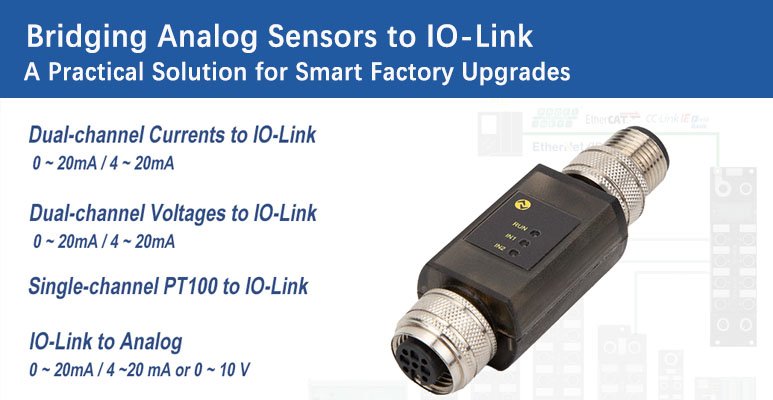
A flexible IO-Link converter platform enables seamless integration between analog and digital systems without redesigning the entire setup.
Supported Conversions
- Analog to IO-Link:0–10V to IO-Link or 4–20mA to IO-Link
- IO-Link to Analog: IO-Link to 0–10V or IO-Link to 4–20mA
- Temperature to IO-Link: PT100 to IO-Link
Benefits
- Cost-efficient system upgrade without replacing sensors
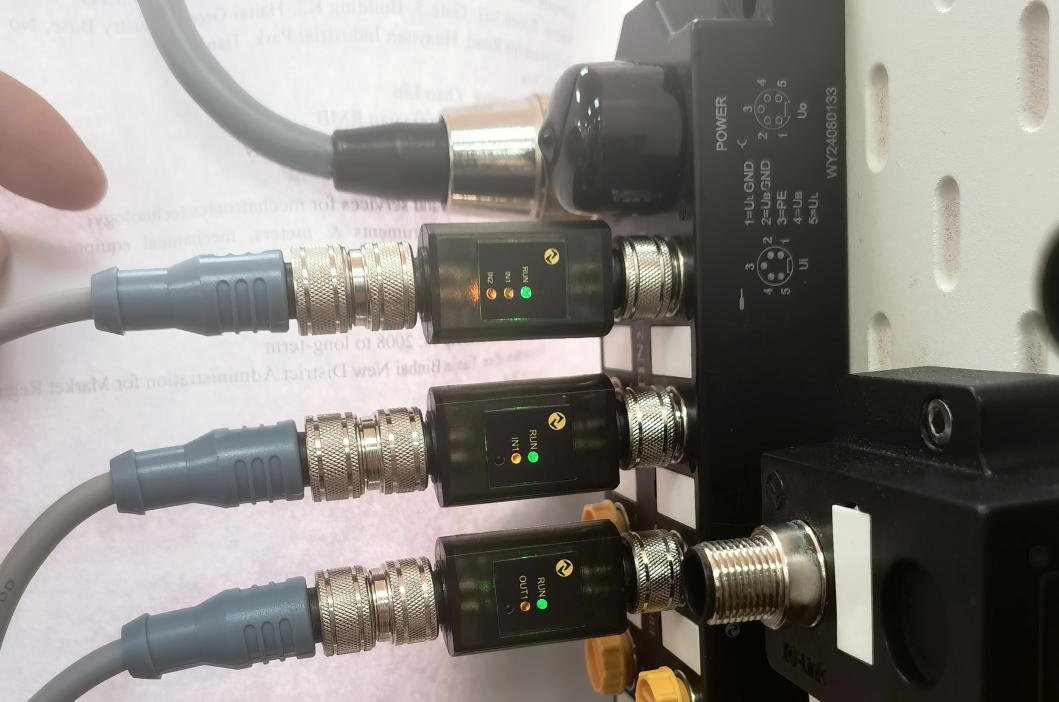
- Plug and play installation via M12 connectors
- Improved diagnostics and system transparency
- Unified housing design across different variants
- Reliable signal conversion in industrial environments
Conclusion
IO-Link converters provide a practical bridge between traditional analog signals and modern digital communication.
They allow gradual system upgrades, reduce costs, and improve data availability—making them an essential component in smart factory transformation.
Dual-channel voltage to io-link converer
Dual-channel current to io-link converer
Components