 +49 211 540747 030
 info@kuemago.com


IO-Link Sensor
Showing 1–12 of 18 resultsSorted by latest




IO-Link Devices & Industrial Communication Solutions
IO-Link is a standardized digital point-to-point interface (IEC 61131-9, maintained by PROFIBUS & PROFINET International) that connects intelligent sensors and actuators to the controller. Kümago supplies the three building blocks: sensors with IO-Link, hubs and converters for integrating existing signals, and IO-Link masters for PROFINET, EtherCAT and EtherNet/IP.
Selection guide: which IO-Link device fits your task?
Measure pressure and parameterize it from the controller – the SEH Smart Pressure Sensor with a large 4-digit digital display, 300° rotatable housing and selectable switching, analog or IO-Link output.
Measure temperature – the TBH Smart IO-Link Temperature Sensor with digital display, or the THH06N Temperature Transmitter with a PT1000 element for −50 °C to +150 °C and accuracy up to ±0.5 °C.
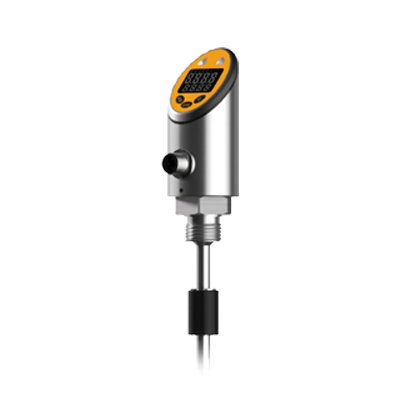
Monitor level and temperature together – the LTH Smart Level-Temperature Sensor combining magnetic level sensing with a PT1000 element and a 4-digit mirrored display.
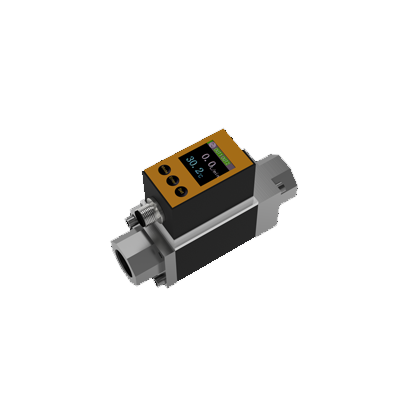
Monitor flow and temperature – the vortex flow sensors FMV-016, FMV-040 and FMV-100 with ranges of 2–16, 5–40 and 10–100 L/min, high-resolution IPS display and selectable NPN / PNP / push-pull output.
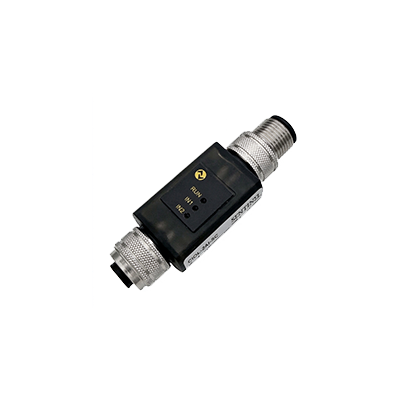
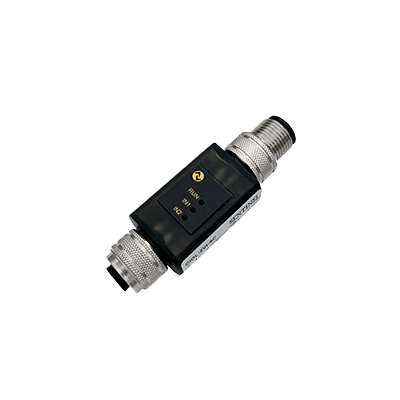
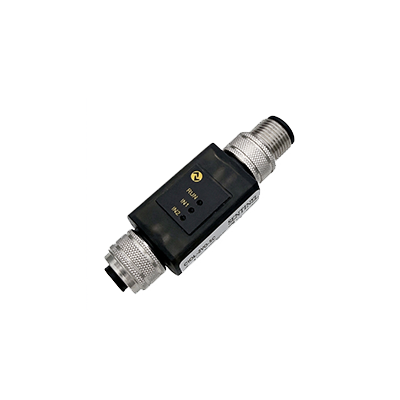
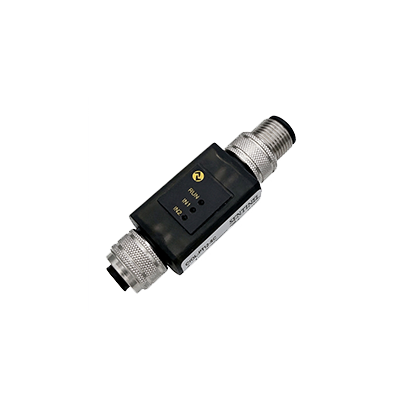
Bring existing analog signals into IO-Link – the CIOL-2AI-SC converter (two channels, 4–20 mA / 0–20 mA, ≤12-bit, 0.5% FS), the CIOL-2VI-SC converter (two channels, 0–10 V, 12-bit) or the SIOL M12 Analog Hub with eight analog input channels.
Bundle digital signals and save wiring – the SIOL M8 with eight digital inputs on M8 3-pin connectors, or the SIOL-M12A-16 with 16 digital inputs and 16 digital outputs at 0.2 A.
Connect IO-Link to the controller – the masters ELPN (PROFINET), ELCT (EtherCAT) and ELIP (EtherNet/IP), each with eight IO-Link master ports and an integrated Ethernet switch.
IO-Link, analog 4–20 mA and fieldbus compared
The three levels differ mainly in cabling, parameterization and diagnostics:
IO-Link – digital and point-to-point. Three-wire unshielded standard cable up to 20 m. Parameterization directly from the controller, diagnostics through cyclic values and events. After a device replacement the parameters are restored from the IODD, so no re-adjustment is needed. Level: device level.
Analog 4–20 mA – analog current signal over shielded cable. No parameterization from the controller, adjustment is done on the device. The only diagnostic value available is the measured signal. After a device replacement a new adjustment is required. Level: device level.
Fieldbus (PROFINET, EtherCAT, EtherNet/IP) – digital network over shielded cable in bus or ring topology. Parameterization is device- and project-specific, complemented by network and participant diagnostics. Level: control and network level.
Important: IO-Link does not replace the fieldbus, it complements it. The IO-Link master bundles the connected devices and hands them over to the higher-level controller – which is why you select the master according to the fieldbus already running in your plant.
Master compatibility at a glance
ELPN – connection via PROFINET, integrated Ethernet switch, 100Base-TX, dual M12 D-coded PROFINET connectors
ELCT – connection via EtherCAT
ELIP – connection via EtherNet/IP, Class A or Class B IO-Link ports
All three masters provide eight IO-Link master ports with M12 A-coded connectors
Hubs (SIOL M8, SIOL M12 Analog Hub, SIOL-M12A-16) and the CIOL converters operate as IO-Link Class A devices and can be connected to IO-Link V1.1 masters
All masters and hubs are fully potted to IP67 for direct field installation
Parameterization is done through the device IODD, directly from your engineering environment
Typical applications
Kümago IO-Link solutions are used wherever sensor data must not only be captured but also evaluated and re-parameterized: in the automotive and supplier industry, in machinery and plant engineering, in packaging technology, in hydraulics and pneumatics and in the food and beverage industry. The benefits are end-to-end process transparency, shorter downtimes through remote parameterization and simpler commissioning using standard cabling.
Frequently asked questions about IO-Link
What is the difference between IO-Link and a fieldbus? IO-Link is a point-to-point connection at the lowest level and does not replace a fieldbus. The IO-Link master provides the connection to the higher-level controller.
What cable length does IO-Link support? According to the IO-Link specification, up to 20 m using an unshielded three-wire standard cable.
Can I keep my existing analog sensors? Yes. The CIOL-2AI-SC converter handles 4–20 mA signals, the CIOL-2VI-SC handles 0–10 V, and the SIOL M12 Analog Hub accepts up to eight analog channels – without replacing the sensors.
When is an IO-Link hub worth it? When several analog or digital signals should be bundled without using a separate IO-Link master port for each one.
Which IO-Link master do I need? The one that matches your existing fieldbus – PROFINET (ELPN), EtherCAT (ELCT) or EtherNet/IP (ELIP).
How are IO-Link devices parameterized? IO-Link is standardized across manufacturers; devices are integrated through their IODD in common engineering and parameterization tools.