 +49 211 540747 030
 info@kuemago.com

Glass-to-Metal Seals
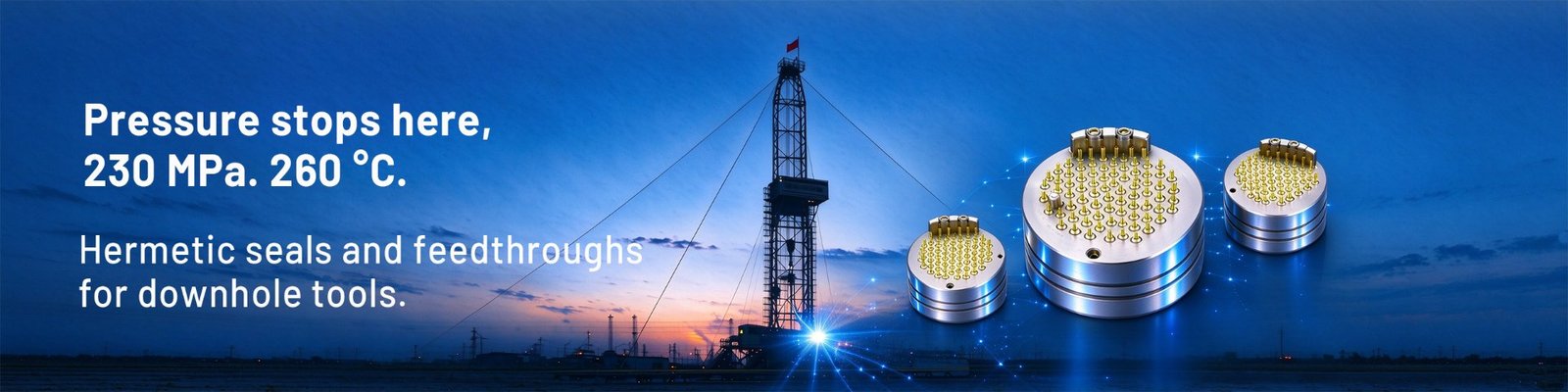
Pressure stops here,
230 MPa. 260 °C.
Hermetic seals and feedthroughs
for downhole tools.
Glass-to-metal seals · GTMS
Hermetic sealing for downhole electronics
Glass-to-metal sealed connectors and feedthroughs for wireline logging, MWD and completion tools - one sealing process, from a single pin to a full harness.
Three product lines, one sealing process
Every item below is built on the same glass-to-metal or PEEK sealing technology. What changes between them is the mechanical interface - how many conductors, how they are terminated, and how the body is mounted.
Single-pin seals
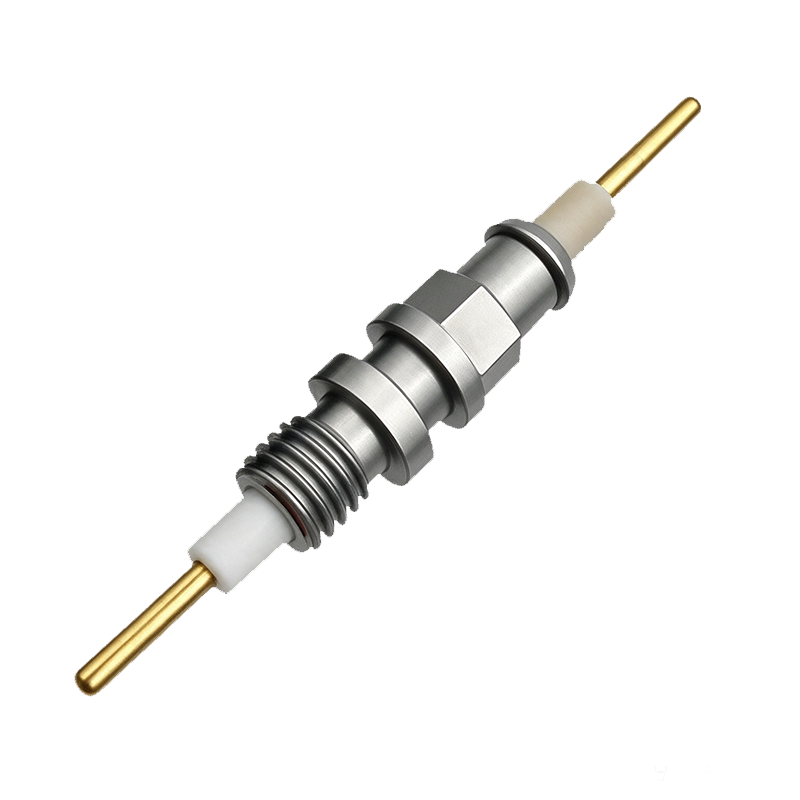
One conductor through a machined body. M4-M12 threads or plain bodies, solder-cup, pin or socket termination, in stainless, PEEK or superalloy.
View outlines →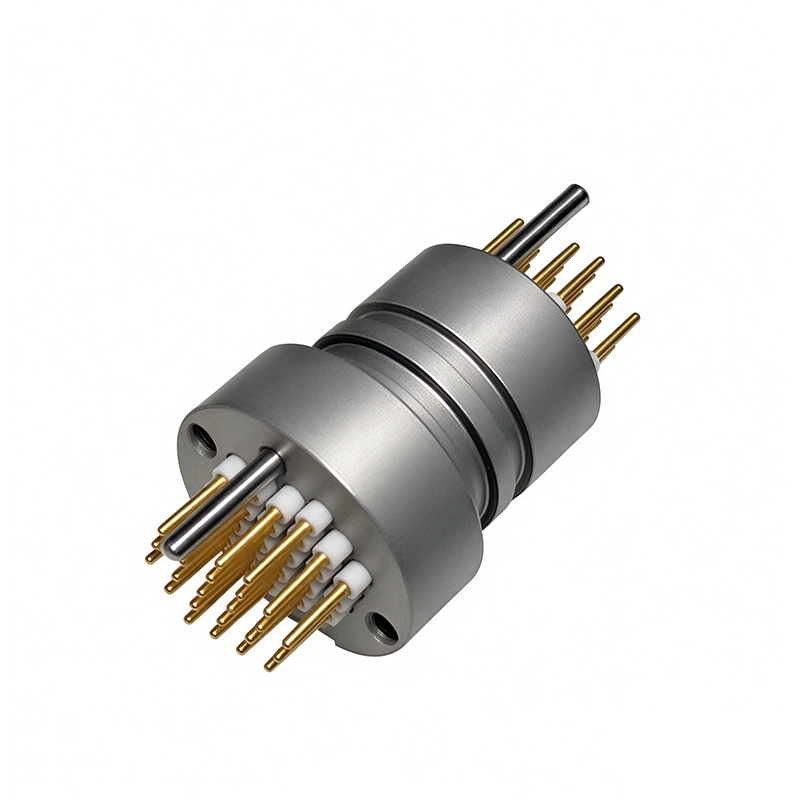
Multi-pin pressure connectors
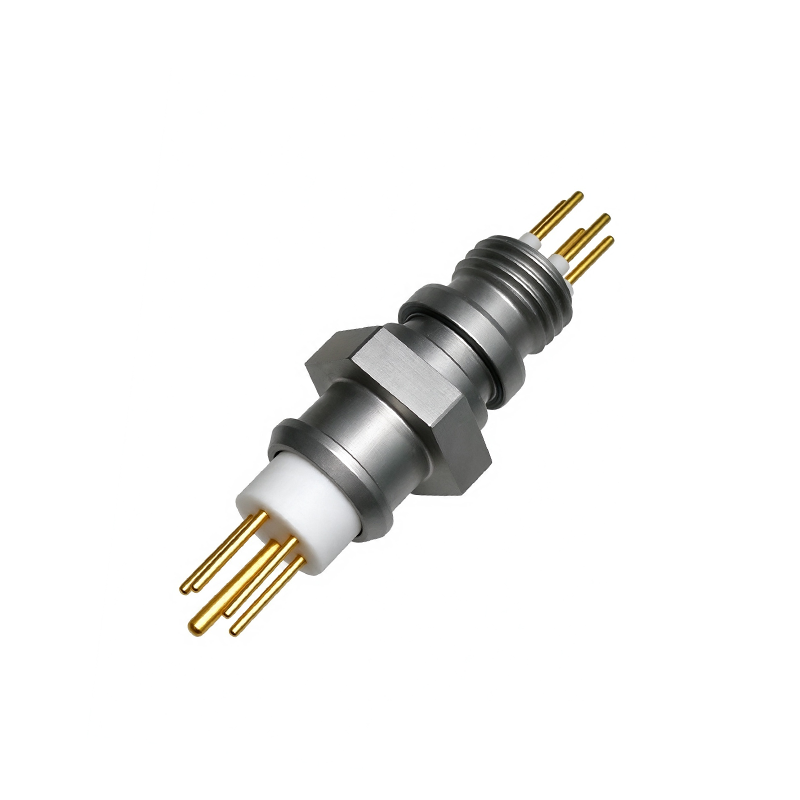
2 to 101 pins in pressure-rated shells. Pin arrangements run from a single ring to four concentric rings; shells accept flange, thread or weld mounting.
View outlines →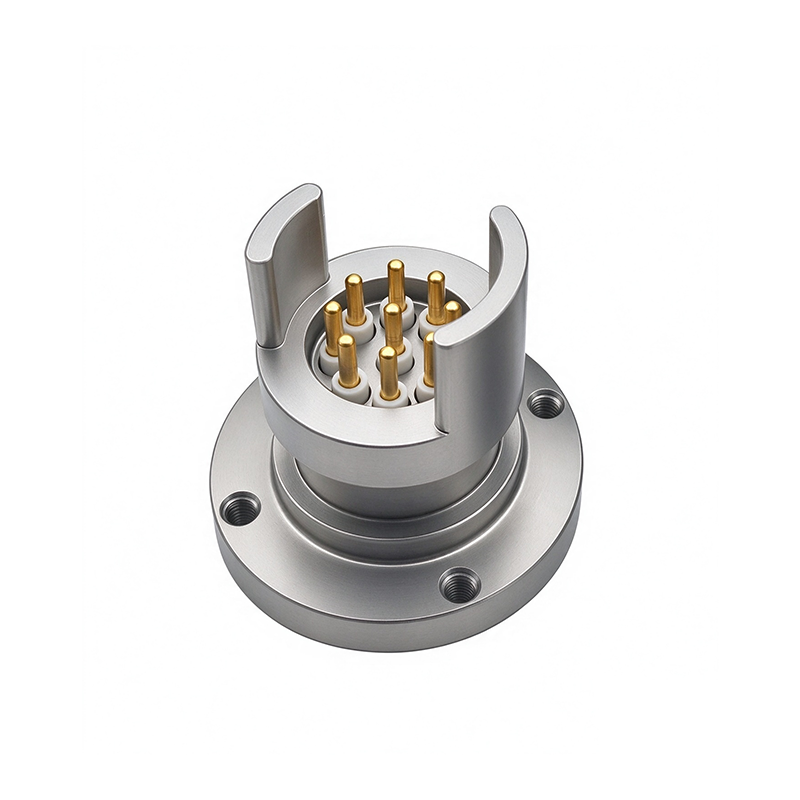
Specialty items
Receptacles, feedthrough plates and dielectric antenna housings - same process, built around a customer-specific interface.
View outlines →Performance classes A - E
Pressure and temperature are chosen at order, independently of the outline. A class E body and a class A body of the same model number are mechanically identical from the outside.
| Class | Working pressure | Working temperature | Sealing | Body material |
|---|---|---|---|---|
| A | < 140 MPa | -55 … 175 ℃ | Glass / PEEK injection | Stainless / PEEK |
| B | 140 MPa | -55 … 175 ℃ | Glass-to-metal | Superalloy |
| C | 172.5 MPa | -55 … 204 ℃ | Glass-to-metal | Superalloy |
| D | 200 MPa | -55 … 230 ℃ | Glass-to-metal | Superalloy |
| E | 230 MPa | -55 … 260 ℃ | Glass-to-metal | Superalloy |
Above 140 MPa the seal is glass-to-metal only; the PEEK route covers the lower pressure classes where a lighter, lower-cost body is preferred.
Common specification
These figures apply to the whole range. Where a value depends on the model or the class, it is stated in the drawing issued for that model.
- Dielectric strength
- 200-1000 V DC, 60 s, leak ≤5 mA
- Insulation, room
- ≥5000 MΩ @ 500 V DC
- Insulation, 200 ℃
- ≥500 MΩ @ 500 V DC
- Rated current
- 1 A continuous
- Vibration
- 10-2000 Hz, 0.3 g²/Hz, 20 g RMS
- Shock
- 490 m/s², 11 ms half-sine
- Thermal shock
- 15 cycles, transfer < 1 min
- Salt spray
- 24 h
- Helium leak
- ≤1×10⁻⁹ Pa·m³/s
- Leak test
- Helium mass spectrometer
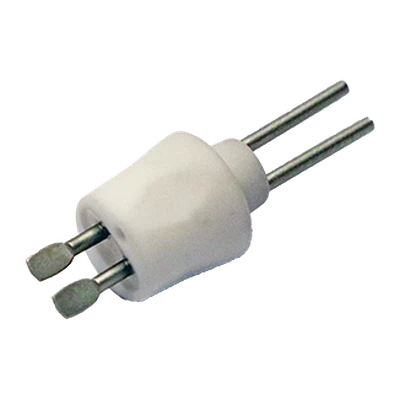
Opened bodies: the pin array is sealed into the shell as one glass-to-metal assembly, then machined and leak-tested.
How to specify
Five decisions, in this order. The first two usually narrow the range down to a handful.
- 01Pressure classPick A-E from well pressure and temperature, not from the connector.
- 02Pin countThe fastest filter - the index is grouped by it.
- 03TerminationSolder cup, pin, socket or PCB tail.
- 04MountingThread (M4-M12), flange, weld-in or press-fit.
- 05Body materialStainless, PEEK or superalloy, by class and medium.
Where these are used
Wireline logging
Sonde-to-sonde joints, pressure bulkheads and cable heads.
MWD / LWD
Electronics-to-sensor feedthroughs inside the collar.
Completion tools
Feedthroughs for gauges and valves in the completion string.
Surface testing
Pressure vessels, autoclaves and test benches.
Not sure which outline fits?
Send the model number and we return the official mechanical drawing. Or send your own drawing or the part you are replacing - we will tell you whether something in the range matches, or what has to be built.
Glass-to-metal seals (GTMS) create the hermetic feedthrough in a connector or a sensor housing: a conductor is bonded into a metal body through glass, so the joint insulates electrically and holds pressure without an elastomer.
The range covers single-pin seals from Ø4.5 mm and multi-pin pressure connectors up to 101 pins, rated to 230 MPa and 260 °C, and tested to a helium leak rate of 1×10⁻⁹ Pa·m³/s. Five pressure classes (A-E) are available on the same mechanical outline.
The same sealing process is used for hermetic sensor packaging – headers and feedthrough plates that carry a signal through a pressure sensor, transmitter or aerospace instrument housing while keeping it gas-tight.
Typical applications: wireline logging, MWD/LWD, completion tools, pressure transmitters, and industrial instrumentation working in vacuum, aggressive media or extreme temperatures.