 +49 211 540747 030
 info@kuemago.com


Sensors
Sensors for industrial measurement
Practical sensing solutions for pressure, flow, level and connected automation applications.
Showing 1–12 of 101 resultsSorted by latest
What this category covers
Sensors is organised by the quantity being measured, not by technology: four measured quantities plus the IO-Link interface — 101 products in total; some of them appear under more than one family (an IO-Link pressure sensor counts as both). Most projects start by fixing which quantity actually has to be measured; the sensor family follows from that.
| Family | What it measures | Products |
|---|---|---|
| Pressure sensors | Gauge, absolute and differential pressure of gases and liquids — the largest family, split into consumer grade (plastic-housed) and industrial grade (stainless steel / ceramic) | 70 |
| Flow sensors | Flow rate of gases and liquids — for open channels, dosing and leak monitoring | 14 |
| Temperature sensors | Temperature in the same process connections as the pressure sensors | 3 |
| Level sensors | Hydrostatic level from the pressure at the bottom of the tank | 2 |
| Force sensors | Tension and compression force via strain gauges | 1 |
| IO-Link Sensor | Sensors and IO-Link masters that report digitally to the PLC — overlaps with the families above | 18 |
The order to choose in
First the quantity, then the pressure type (gauge / absolute / differential), then process connection and wetted material, then the output signal (mV, amplified voltage, I²C, IO-Link) — and the range last. Fixing the range first narrows the choice for no reason.
Not sure which family fits? Send us the medium, the pressure range and the output you need — we will confirm the type and the range.

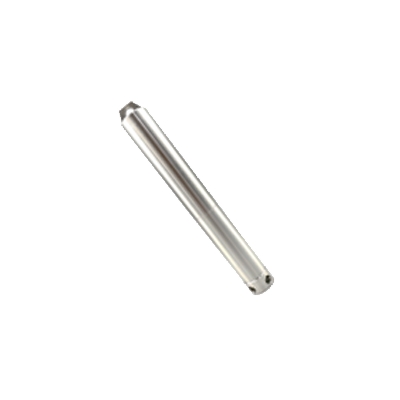


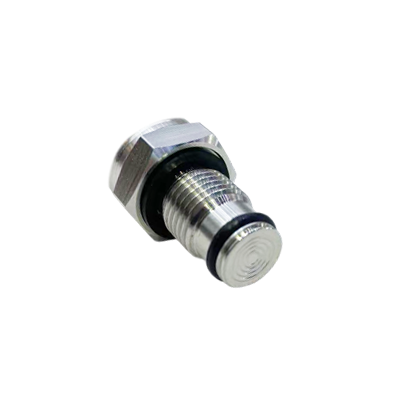

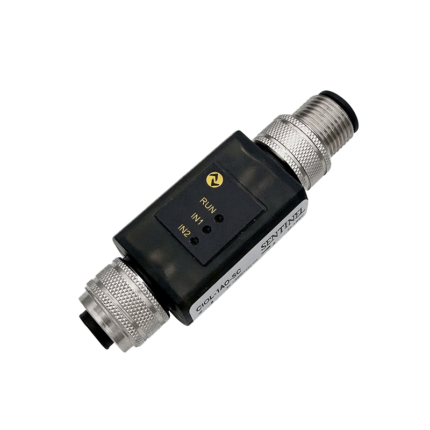

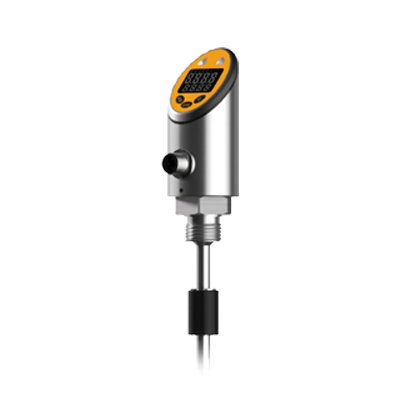


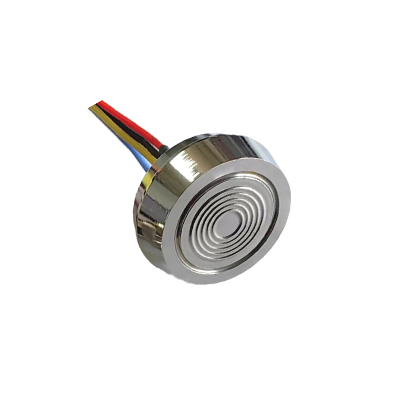
Industrial Sensors for Measurement, Monitoring and Automation
This category covers a broad range of sensors, transmitters and related instruments for industrial monitoring and measurement. Products are organised by the physical quantity they measure and selected to suit the requirements of different industries and applications.
Sensors are indispensable components of industrial automation. They work as functional building blocks inside equipment and systems – in automated production lines, industrial control engineering, mechanical engineering, process automation and HVAC applications.
There is no single “best” sensor for every case: what matters is the most suitable solution for the specific application. Key selection criteria are measuring range, accuracy, interface and materials – and a sound choice depends strongly on the real operating conditions and practical engineering experience.
Choose sensors by measured quantity
The fastest way to orient yourself is by the quantity being measured. The overview below leads to the right product group:
- Pressure – pressure sensors and transmitters for gas and liquid pressure, from the MEMS sensing element to the industrial 4–20 mA transmitter. Go to Pressure sensors
- Flow – thermal, electromagnetic and ultrasonic flow sensors for liquids and gases. Go to Flow sensors
- Temperature – temperature sensors with PT1000 resistance element for measurement and control tasks. Go to Temperature sensors
- Level – level sensors for detecting liquid levels in vessels and tanks. Go to Level sensors
- Force – force sensors for measuring tension and compression in testing and production processes. Go to Force sensors
- Digital communication – IO-Link sensors, masters and hubs for fully digital integration. Go to IO-Link Solutions
Measuring principles and sensor types
- Piezoresistive MEMS sensors – silicon sensing element with high sensitivity and compact size; the standard for mid-range pressure measurement.
- Capacitive ceramic sensors – robust ceramic cell, resistant to aggressive media and high overload.
- Thin-film strain gauge sensors – metal thin-film strain gauges for high accuracy and long-term stability in industrial transmitters.
- Piezoelectric sensors – for measuring fast, dynamic pressure events in combustion and hydraulic processes.
- Thermal flow sensors – calorimetric measuring principle for gases and low-viscosity media.
- Ultrasonic and electromagnetic flow sensors – non-contact or wear-free measurement in pipelines.
Selection criteria for industrial sensors
- Measuring range – with sufficient headroom on the high side (overload) and the low side (resolution).
- Accuracy and stability – linearity, repeatability and temperature compensation across the full range.
- Interface – analogue (mV, ratiometric 0.5–4.5 V, 4–20 mA, 0–10 V), digital (I²C, RS485) or IO-Link.
- Materials and media compatibility – 316L stainless steel, titanium or ceramic depending on the medium.
- Environment – ingress protection, temperature range, vibration and EMC conditions at the installation point.
- Mounting and connection – threads, flush or hygienic versions, connectors.
Typical applications
- Automated production and assembly lines
- Industrial control and closed-loop regulation
- Mechanical engineering and special-purpose machinery
- Process automation in chemical, pharmaceutical and food production
- Hydraulic and pneumatic systems
- Building services and HVAC technology
- Test benches and OEM series products
Frequently asked questions about industrial sensors
- Which sensors are best for industry? There is no blanket recommendation. What counts is the measured quantity, range, medium, ambient conditions and the required interface. For harsh environments, ceramic sensing cells or stainless steel housings are a good fit; for fully digital integration, IO-Link models.
- How do you recognise a high-quality process sensor? By defined figures for accuracy, long-term stability and temperature compensation, by corrosion-resistant materials such as 316L, and by a traceable specification instead of vague headline values.
- When is IO-Link worth it instead of an analogue interface? As soon as parameters need to be transmitted digitally, diagnostic and process data evaluated, or sensors re-parameterised centrally. IO-Link significantly reduces commissioning effort and downtime.
- What is the difference between a sensor and a transmitter? A sensor delivers a raw measurable signal (e.g. mV); a transmitter conditions it into a standardised output such as 4–20 mA, making it directly connectable to controllers.
- Which sensor types suit process automation? Primarily pressure, flow, temperature and level sensors, complemented by IO-Link devices for digital communication.