+49 211 540747 030
 info@kuemago.com

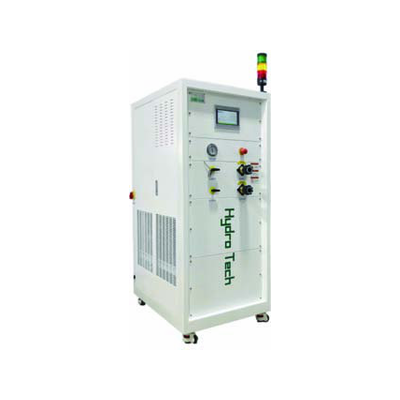

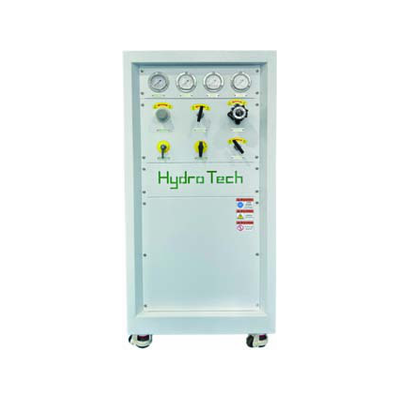
The HT-AL cycles a part between two pressure levels using compressed air, up to 3 Hz — 180 cycles per minute. It can run in positive pressure, in negative pressure, or alternate between the two, which makes it the entry point to the series for gauges, sensors and small pressure-bearing parts.
Technical data
| Pressure range | 0 – 8 bar, extendable to 40 / 70 / 280 bar |
|---|---|
| Test medium | Compressed air |
| Pulse frequency | 0.1 – 3 Hz (up to 180 cycles per minute) |
| Waveform | Trapezoidal, sine |
| Pressure modes | Positive pressure, negative pressure (vacuum), or alternating |
| Drive | Plant compressed air; pneumatic drive produces the pressure output |
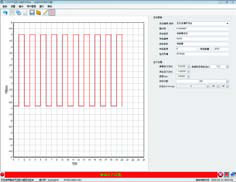
| Control | Programmable pressure curve, pulse frequency and cycle count |
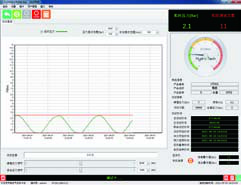
| Data | P–T curve display and recording, test data export |
| Dimensions | 600 × 600 × 1720 mm |
What it does
- Programs a pressure profile, a frequency and a cycle count, then runs unattended.
- Records pressure against time for every run, so the profile that a part actually saw can be attached to a test report.
- Alternates between positive and negative pressure for parts that see both in service — differential sensors, sealed housings, low-pressure switches.
- Handles low-pressure work where a hydraulic bench would be oversized and would contaminate the part with oil.
Typical use
- Conditioning and stress relief of low-pressure gauges and sensors before calibration.
- Cycle testing of capsules, bellows, low-pressure switches and sealed enclosures.
- Leak-path and seat-settling checks on parts that cycle between vacuum and low pressure.
How a unit is specified
Three numbers fix the configuration: how many parts run at once, the internal volume of one part plus its fixture, and the frequency you need. From those we size the air consumption and the fixture station; everything else — port threads, cavity volume, specimen envelope, safety enclosure — follows from the part drawing.
Standard and custom
The pressure source is a standard platform. The fixture station — port count, adapters, cavity volume, isolation valves — is built to the part. That split is what keeps delivery predictable while still fitting the part you actually have.